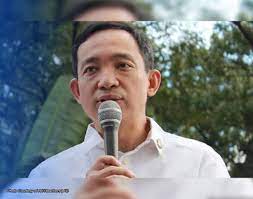
House Deputy Minority Leader and ACT Teachers Party-list Representative Antonio Tinio has filed House Resolution No. 1123 calling for an urgent investigation into the impact of the June 8 Magnitude 7.8 earthquake on public school infrastructure in Mindanao, the disaster response of the Department of Education and other agencies, and DepEd’s plan to ensure continuity of quality education for affected students.
The resolution, co-authored by Gabriela Women’s Party Rep. Sarah Jane Elago and Kabataan Party-list Rep. Renee Louise Co, comes as the earthquake damaged 1,378 public schools across six regions, affecting four million learners and over 156,000 teachers and education support personnel. Initial damage assessments reveal 1,588 classrooms totally destroyed, 1,774 sustaining major damage, and at least P245.8 million needed for repairs alone.
“This earthquake has exposed what many of us have long warned about: our school infrastructure is crumbling and our children are at risk,” Tinio said. “Buildings that should have been condemned years ago are still standing—until they collapse. We need a comprehensive audit of every public school in this country to determine which structures are safe and which are disasters waiting to happen.”
Tinio pointed to alarming details from the initial assessments, including the collapse of a condemned building at Matanao National High School in Davao del Sur and a makeshift structure at Mahayahay Elementary School in Davao Occidental—both incidents that could have resulted in mass casualties.
“The fact that children and teachers are taking shelter in condemned buildings or makeshift structures speaks volumes about the state of our educational infrastructure,” Tinio said. “This is not just about earthquake damage—this is about the government’s failure to invest in safe learning spaces for our students.”
Tinio also emphasized that the prolonged class suspensions—affecting 4,364 classes as of June 10, with entire divisions remaining closed “until further notice”—will deepen existing learning deficits, particularly in Mindanao where literacy rates are already critically low. The Comprehensive Rapid Literacy Assessment showed that 75.6 percent of students in Tawi-Tawi are struggling readers, with similar crises across other Mindanao divisions.
“Online and distance learning have proven ineffective, especially for struggling readers and in areas with poor digital infrastructure,” Tinio said. “Yet the government’s response has been to suspend classes indefinitely rather than rapidly repair facilities and get students back to safe, face-to-face learning. This compounds an already serious education crisis.”
Tinio stressed that the earthquake has revealed systemic vulnerabilities that extend far beyond Mindanao. According to the Second Congressional Commission on Education (EDCOM II), 51,222 classrooms nationwide are at least 50 years old and scheduled for condemnation by 2028, while 2,335 classrooms have already been destroyed by earthquakes, typhoons, and other calamities.
“Ang Mindanao earthquake ay nagpakita lamang ng mas malaking problema: ang ating mga paaralan sa buong bansa ay nasa panganib,” Tinio said. “Mahigit 51,000 klasrum ang nakatakda nang maging condemned sa loob lamang ng dalawang taon. Kung hindi tayo kumilos ngayon, ang susunod na kalamidad ay magdudulot ng mas maraming buhay na mawawala.”
Tinio called for immediate action on three fronts: a comprehensive structural audit of all public schools nationwide, a transparent assessment of DepEd’s disaster response and inter-agency coordination, and a detailed plan to restore face-to-face learning while addressing the learning crisis affecting millions of students.
“The government must prioritize the safety and education of our children,” Tinio said. “That means conducting a full audit of school infrastructure, ensuring rapid repairs in affected areas, and developing a comprehensive plan to restore quality education. Our students cannot wait—and they cannot learn in buildings that might collapse on them.”
“Ang buhay at kinabukasan ng ating mga kabataan ay hindi dapat ikompromiso dahil sa kapabayaan ng pamahalaan,” Tinio concluded. “Kailangan ng mabilis na aksyon, malaking budget para sa pagrepair ng mga paaralan, at tunay na plano para sa patuloy na kalidad na edukasyon.” #