Following the Department of Education’s (DepEd) report on the devastating impact of the 7.8-magnitude earthquake that struck southern Mindanao, the Alliance of Concerned Teachers (ACT) called on the agency to immediately demolish abandoned school buildings that have remained standing for years and all structures already identified for condemnation, warning that these pose grave threats to the safety and lives of teachers, education support personnel, and learners.
ACT likewise urged DepEd to undertake a comprehensive nationwide assessment of all school infrastructure to identify buildings requiring urgent repair, retrofitting, strengthening, reconstruction, or replacement, and to implement decisive measures that will reduce disaster risks in schools.
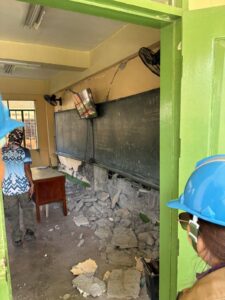
According to DepEd’s latest report, the earthquake damaged 1,405 classrooms and facilities in 267 schools across five regions, including 199 totally damaged classrooms, 296 with major damage, 896 with minor damage, and 14 damaged WASH facilities. The group said the figures expose the alarming fragility of school infrastructure and underscore how vulnerable thousands of schools remain to disasters.
“The destruction witnessed in Mindanao should serve as a wake-up call. When a single earthquake can render more than 1,400 classrooms and facilities unsafe, it becomes painfully clear that many schools are one disaster away from catastrophe,” Ruby Bernardo, ACT Chairperson said.
ACT cited data from the EDCOM II National Education Plan showing that 51,222 classrooms that are already 50 years old and above are due for condemnation by 2028, while there are 2,335 classrooms totally damaged by typhoons, earthquakes, and other calamities in the past years. ACT pointed out that these figures reveal not only the massive infrastructure backlog confronting Philippine education but also the continuing exposure of millions of learners and school personnel to unsafe learning and working conditions.
ACT stressed that beyond the effects of aging infrastructure and recurring disasters, serious questions must be raised regarding the quality and integrity of school construction projects. The group noted that DepEd itself has flagged more than a thousand DPWH-built school buildings that were reported as “turned over” but remain unfinished, unusable, or non-operational.
“This is deeply alarming. At a time when public schools are suffering from severe classroom shortages, the existence of unfinished and unusable school buildings points to systemic failures in planning, implementation, and accountability. Corruption and negligence in school infrastructure projects deprive students of safe classrooms, expose teachers and learners to danger, and squander public funds that should be strengthening the education system,” Bernardo emphasized.
ACT urged DepEd and other concerned agencies to expand their infrastructure audit and identify school buildings that may have been constructed below safety standards or compromised by corruption but continue to be occupied by teachers and students. The group stressed that every unsafe classroom left unchecked represents a potential disaster waiting to happen.
ACT reiterated its call for the immediate allocation of adequate funds for the repair, retrofitting, reconstruction, and replacement of damaged and aging school buildings nationwide. The group urged the Marcos Jr. administration to realign billions in presidential pork, confidential and intelligence funds, and allocations for hosting the ASEAN Summit toward urgently needed education funding.
The group also called for the provision of psychosocial services to victims and communities affected by the earthquake and the expansion of disaster risk reduction and management (DRRM) training and capacity-building programs for school personnel and learners.
“As the new school year formally opens, the same deplorable learning and working conditions continue to confront teachers and students. The earthquake has once again exposed how years of chronic underfunding have left our schools vulnerable to disasters and unable to provide safe, resilient learning environments,” Bernardo explained.
ACT called on the Marcos Jr. administration to decisively address the education crisis by substantially increasing public investment in education, including raising education spending to at least 6% of GDP, in line with international benchmarks. ACT likewise renewed its demand for P50,000 entry-level salary for teachers and P36,000 basic pay for education support personnel to uplift their living conditions and strengthen the delivery of quality education.#