by Diego Morra
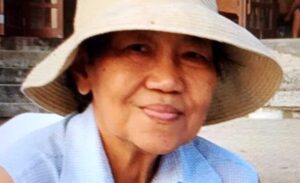
Two months after a call was made to support Lu Roque’s delicate surgical procedure and her comrades, friends and kin responded, her prolonged struggle with health issues, as well as the terrible disease called cancer, took a huge toll on her. Lu passed away in the early morning of Mar. 12, 2026 at the National Kidney Transplant Institute (NKTI.)
Like many other children in Central Luzon, Lu knew how poverty among the peasantry bred discontent and fueled agrarian unrest, exacerbated by comprador-landlord domination that controlled the levers of power and protected by US military and naval bases. Landlord assets taken over by guerrillas for distribution were grabbed by the ruling class backed by US-controlled military. Massacres ensued even as winning progressive officials were kicked out. Peaceful change became impossible.
Such was the situation in the late 1950s and 1960s, when a comprehensive movement to understand the systemic crisis that stunted Philippine society, when its most productive classes, the workers and peasants, were in chains. Scaling the social ladder was a Sisyphean task and the system itself was committed only to have these two social classes replicate themselves and produce the wealth that trhe plutocrats and oligopolists monopolize. This system, essentially oppressive and exploitative, was the reason why the youth and students started questioning why the grossly undemocratic and unequal order exists. This was the context of the Student Cultural Association of UP (SCAUP), the first organization that took the cudgels to understand why the unjust system flourishes and how it could be overhauled.
Lu was part of that generation of activists that did not need to be recruited as they recruited themselves to be conscious and aware that progress cannot be achieved in the country unless the scourge of the semi-colonial and semi-feudal system is overturned. This generation spanned the organization of SCAUP and the Kabataang Makabayan (KM), both against US aggression in Vietnam and its members the first victims of brutality in 1964, when police truncheoned protesters. This violence spurred hectic organizing work among activists and Lu was among those who worked tirelessly to promote national democracy among students, workers, peasants and in rural communities.
It has been said that nationalism has been in the DNA of the Roque family. Lu’s brother, Magtanggol, an engineer and leading member of the Alpha Phi Omega fraternity in UP Diliman, was already earning more than enough in a multinational corporation when he left and pitched tent in Mindanao, working among members of indigenous groups and organizing communities in the hills and plains. He was martyred in Davao. Her brother Pat, now a retired photojournalist, was also a political prisoner during the darkest years of the Marcos Sr. martial law dictatorship. Lu herself was incarcerated, tortured and abused, never abandoning her commitment despite blandishments and the futile cajoling efforts by the dictatorship’s minions.
Despite all the trials and tribulations, Lu never wavered, working to defend the oppressed and support to the hilt those who fight exploitation in factories, mines and mills. Also called Lubay by her colleagues, Lu was not only a mother, wife, and a grandmother but also an indefatigable champion of the quest for peace. She never became depressed despite the trauma of detention, the psychological torture and claustrophobia of cramped prison cells. A tribute noted that in her advanced age, Lu grew even more cheerful, generous, and gentle, sharing her experiences with younger activists. Lu served as a consultant in the peace process between the National Democratic Front of the Philippines (NDFP) and the government of the Republic of the Philippines (GRP) and was among those who drafted documents addressing the root causes of the armed conflict.
Like other stalwarts of the First Quarter Storm (FQS), Lu never lost heart in pushing for a comprehensive resolution of the armed conflict even if the Marcos Jr. government has not moved the needle in informal discussions despite a pledge in late 2023 to do so. Until the very end, Lu carried the torch of peace, even when malevolent forces continue to stamp out the light and plunge the country into a tenebrous future.
Her wake at St. Peter Chapels, Commonwealth Ave., Quezon City, started on Mar. 17 and last until Mar. 20. In the evening of Mar. 19, the FQS Movement will hold a final ceremony and eulogy for Lu. The following day, Mar. 20, the Kilusang Mayo Uno (KMU) will conduct necrological rites for Lu, who had served the workers movement throughout her life. Her remains will be brought to the Roque bouse in Mambog, Malolos City, Bulacan on Saturday, Mar. 21, for her homecoming and wake. She will be interred at the Mambog Public Cemetery on Sunday, Mar. 22. #