
by Diego Morra
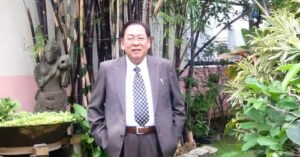
Friends and colleagues were shocked when they were told that Eugenio “Gene” Demigillo passed away on Aug. 16, 2026. Formerly a philosophy professor at the University of the Philippines in Diliman (UP Diliman), Gene had the distinction of resigning from the Department of Philosophy decades agree after he secured his tenure in the highly competitive academe.
Under his tutelage, interest on philosophical inquiry widened despite the continuing clashes among professors battling for and against empiricism, logical positivism, existentialism and students fiddling with truth tables and syllogisms and reading through the works of Sartre, Popper, Marcuse, Gramsci, Althusser, Poulantzas, Foucault and Derrida, who have squabbled over morphemes and meanings, and deconstruction, or reverse linguistic engineering.
Gene was teaching philosophy at a time when the department was flooded with students, and UP was suffering from the hostility of a regime that wanted the centers of intellectual ferment shackled and UP was bootstrapping itself under its annual inadequate budget. He never got tired of analyzing the woes of the benighted nation, the foibles of the indiscreet bourgeoisie, graft in the corridors of power and widespread human rights violations when the Marcos Sr. dictatorship was in its darkest high noon.
He, his cousins and nephews were to activism born, simply because they saw the bowdlerized image pushed by the regime was the direct opposite of the people’s lived reality. His wise counsel was heeded by fraternities that he had advised like Alpha Phi Omega and Pi Sigma, which was founded by Robert Sombillo, as well as activist groups that frequented the Faculty Center (which was razed by a fire of suspicious origin.) One of his philosophy students eventually became the head of the Iglesia NI Cristo (INC), while many took to the hills, and still others journeyed into the labyrinthine world of law and jurisprudence.
Gene was part of a group of young UP intellectuals in the late 1970s that would dabble with the works of the members of the Critical School like Marcuse, Theodor Adorno, Walter Benjamin and their students like Jurgen Habermas. At about the same time, many anthropologists were dissecting Claude Levi-Strauss and his structuralism and UP was besieged by the dependency theory of Andre Gunder Frank, less than a decade after the Paris upheaval and the First Quarter Storm in the Philippines. It was also a period when revolutionary ferment was rising and one old hand in Philippine political polemics even suggested resurrecting an already dead political party to add more fun to the struggle. The idea fizzled out. But the spirited discussions continued, giving more substance to the specific characteristics of a movement in a country always unsure of what it really is.
What set Gene apart from others in the academe was that fire in the belly, the serious questioning of what is, the kind of Socratic bent that wanted to examine life if it were worth keeping, the commitment to provide correct answers to the profound questions that hobble society. He also understood that to serve the ultimate market of better ideas, he had to take his own great leap outside of the academe. So, he did, right after securing his tenure that would have guaranteed his academic career for until retirement.
He became a rural banker, serving in a remote corner of Mindanao—in Pigcawayan, North Cotabato— where a colleague found him one fine noon, safe in his hammock and unaware that a squad of famished visitors, one from UP and the rest from the teaching staff of the Sta. Cruz Mission in Lake Sebu, South Cotabato, would come to beg for a free meal en route to the nearest airport. Stunned by the presence of a colleague, Gene asked if the visitor was “Ikaw ba yan? The hungry guy was not a mirage. He came from field work, teaching the faculty members of a school serving the T-boli community and doing some ethnography of the side.
It came as no surprise that Gene was known to the Sta. Cruz Mission teachers, having served as speaker in Cagayan de Oro for a seminar on rural research, and acting as resource person for church-related seminars. Indeed, Gene has touched base with his market and he has spearheaded the growth of their rural bank, now known as Partner Rural Bank (PR Bank.) By expanding the reach of his bank, Gene boosted the incomes of farmers and livestock raisers, making the bank one of the best in the country. One colleague who met Gene during the Christmas season two years at the UP Hotel recalled that he encouraged him to continue writing analytical pieces. To which he replied: “Gene, continue doing better than Alfred Schutz. You are the people’s banker.” #