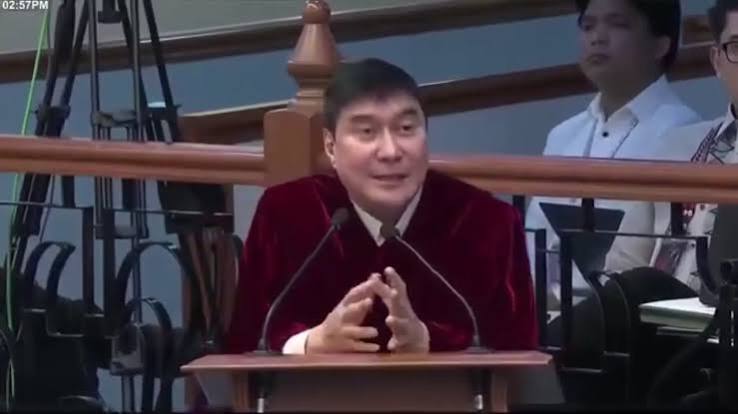
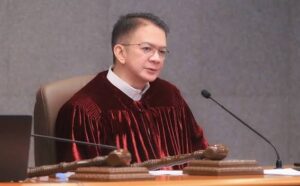
Presiding Officer Francis “Chiz” Escudero on Wednesday issued a triple ruling on impartiality and decorum in the impeachment trial of Vice President Sara Duterte, delivering pointed reminders to the impeached official , prosecutors, the respondent’s defense counsel, and senator‑judges to uphold fairness, professionalism, and public confidence in the Senate sitting as an impeachment court.
Escudero reminded the prosecution team that their duty is not to convict, but to ensure justice is done. Quoting Canon II, Section 31 of the Code of Professional Responsibility and Accountability (CPRA), he said: “The primary duty of a public prosecutor is not to convict but to see that justice is done.” He added that the prosecution’s object “must therefore be the just resolution of the case — not victory at all costs,” a standard that governs both courtroom conduct and public statements.
Turning to the defense, the veteran legislator emphasized that the counsel’s duty is not to secure acquittal at all costs but “to provide competent, efficient, conscientious, and diligent representation, citing People of the Philippines v. XXX (G.R. No. 245926, July 25, 2023) that tells defense lawyers must “faithfully protect their client’s constitutional and procedural rights, rigorously test the prosecution’s evidence, and hold the prosecution to the burden of proof,” while remaining within the bounds of law and ethics.
Addressing the senator‑judges, he invoked jurisprudence from Webb v. De Leon (G.R. Nos. 121234 and 121245, August 23, 1995): “More than convicting the guilty and acquitting the innocent, the business of this Court is to assure fulfillment of the promise that justice shall be done and is done — and that is the only way for this Court to obtain an acquittal from the bar of public opinion.”
He said that obligation rests on every senator‑judge “to decide solely upon the record, under the Constitution and the Rules, and in a manner worthy of the confidence of the people.”
The closing reminders capped the presiding officer’s triple ruling that earlier directed all parties to halt trial‑related commentary outside the court and to preserve decorum and impartiality.
In his first ruling, Escudero reminded the senator‑judges to embody restraint and practice political neutrality, citing their oath “to do impartial justice” and provisions of the Code of Judicial Conduct.
Stressing that impartiality must be observed not only in fact but also in appearance, he said: “This Court has repeatedly and consistently demanded ‘the cold neutrality of an impartial judge’ as the indispensable imperative of due process.”
The presiding officer clarified that while senator‑judges retain the authority to probe witnesses for truth, he cautioned against turning clarificatory questions into partisan advocacy. Alleged violations of the impeachment oath or Senate rules, he added, should be addressed through the Senate Committee on Ethics and Privileges.
Escudero’s second ruling focused on Rule XVIII of the Senate’s impeachment rules, which bars public statements on the merits of a pending trial. Forgiving past lapses, he declared that the rule would henceforth be strictly enforced.
“From this point forward, Rule XVIII shall be strictly enforced and given full force and effect. Henceforth, the Chair hereby strictly enjoins all persons covered by Rule XVIII … from making public statements or otherwise discussing, sharing, or endorsing comments pertaining to the merits of this pending impeachment trial and from engaging in trial by publicity, as they directly threaten the independence of the court, degrade the dignity of the tribunal, and risk turning it into a circus, and weaponize the media to substitute public outrage for actual evidence,” he ordered
The ruling clarified that Rule XVIII applies only to prosecutors, the impeached official, and their counsels, and witnesses. Lawyer-spokespersons but not counsel on record, however, may still be liable under Rule 71 on indirect contempt and the Code of Professional Responsibility and Accountability or the CPRA.
The veteran legislator reiterated his earlier suggestion that parties appoint spokespersons outside their legal teams, or alternatively, that counsel withdraw as counsel of record if they wish to serve solely as spokespersons.
In his third ruling, Escudero established detailed guidelines for compliance with Rule XVIII, defining “merits” as substantive issues such as witness credibility, evidence relevance, or guilt and innocence. While allowing neutral “fair and true reports” of proceedings, he prohibited statements that prejudge outcomes, question rulings, or use media pressure as substitute for proof.
“For purposes of this trial, a statement pertains to the merits when, viewed in its full context, it evaluates a disputed fact; the credibility of a witness; or the relevance, probative value, weight, or sufficiency of particular evidence; assesses the legal viability of an Article of Impeachment or a substantive defense; advocates a particular disposition of the charges; or announces or forecasts the ultimate vote,” he said.
Under a two-strike policy that will govern violations, the impeachment court will give a public reprimand to first-time offenders and will impose a P30,000-fine to the second and subsequent offenses plus restriction on courtroom participation.
Lawyers found in breach may also face referral to the Supreme Court or Integrated Bar of the Philippines for disciplinary action. Escudero said that referrals will not rest solely on Rule XVIII violations, but on independent breaches of CPRA’s standards of courtesy, civility, fairness, candor, or dignified language.
The presiding officer again reminded prosecution and defense teams of their ethical duties: prosecutors must seek justice rather than conviction at all costs, while defense counsel must provide competent and diligent representation within the bounds of law and ethics. He also reiterated that lawyers are bound by the CPRA to avoid prejudgment and to maintain civility in and out of court.
Closing his ruling, Escudero issued a final warning that willful disobedience of Rule XVIII would be met with contempt sanctions, citing jurisprudence to underscore the tribunal’s role in preserving public trust. #