by Diego Morra
The Filipino people should arrogate unto itself the duty of checking the graft-ridden budget process, which has become the source of ill-gotten wealth for politicians and bureaucrats alike since the Philippine Assembly was established by American overlords in 1907, purportedly to pave the way for “self-government,” but still under the thumb of the Philippine Commission, which acted as the upper chamber of the bicameral legislature. By 1920, the pork barrel, already institutionalized in the US Congress, was inserted into the budget-making process.
This legislative feature feathered the nests of American overlords in the commission, pretty much carving out Philippine territory into logging and mining concessions, plantations and controlling various types of industries. The rapacity of the US bureaucrats knew no bounds and the corrupt practices forced Filipino journalists to attack the Americans, with the “Aves de Rapina” editorial of Fidel Reyes in El Renacimiento in Oct. 1908, just a year after the assembly was organized, exposing the corruption of the Americans.
Reyes was convicted of libeling Dean Worcester but the Americans never had their feet held to the fire for owning large tracts of land, the way Filipino officials in the Bureau of Lands got to have titles to the vert land they were just supposed to administer. American businessmen mined and quarried in the Cordillera, denuded the forests of Cagayan and Isabela, owned huge logging areas in Negros Occidental, Cotabato, Davao and Northeast Mindanao. Large US plantations and agribusiness corporations continue to operate in Mindanao. Today, political dynasties in the Davao provinces are deep into mining operations,
Inasmuch as the 1986 civilian-military uprising that ousted the 14-year Marcos dictatorship was a direct people’s action to unseat a bloody regime, there should be no argument that the Filipino people reserve their right for direct action to evaluate the annual General Appropriations Act (GAA), check on all inserted items and assess how any administration intends to spend taxpayer money. By doing so, the Filipino people will not be betrayed by their faithless elected representatives and by senators chosen by a national constituency. The annual budget has become the piggybank of congressmen and senators who eventually meddled with infrastructure projects to amass filthy lucre through the illegal commissions system through which cold cas was shared by lawmakers, DPWH officials and officials of the DBM, COA and the budget department.
For several years, the Center for People Empowerment in Governance (CenPEG), then under the late UP Professor Temario Rivera, took the people’s cudgels in questioning the legitimacy of the results of automated election systems (AES) as well as the outcome of the 2022 presidential derby, when in a matter of minutes, 20-million votes were canvassed, counted and the results transmitted to the Comelec through an IP address, the use of which the Comelec purportedly paid billions. IP addresses are free to use by any party. Now that Dr. Rivera is gone, it is retired UP Prof. Roland Sumbulan is taking up the slack and proposing a sustained effort must be made to hold lawmakers and bureaucrats accountable for crafting a budget that will be butchered by congressmen and senators.
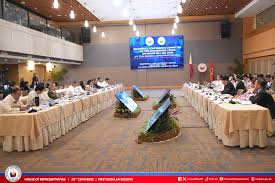
Dr. Simbulan says CenPEG is deeply concerned with the way the annual appropriations act is crafted, first by the Department of Budget and Management (DBM) and Malacanang through the National Expenditure Program (NEP), then sent to the House of Representatives for evaluation and amendments before the and then to the small committee before it is approved and transmitted to the Senate. The bicameral conference committee (BCC), comprised of members of the two chambers, then meets to finalize the GAA for signing by the President. CenPEG scores the anomalous absence of transparency and accountability in the national budgeting process, particularly regarding the so-called “allocables” and “non-allocables.”
These classifications, unique to the legislature and the DPWH, provide the open space for graft as it allows the players in the plunder show great latitude in how to steal, dispense political favors and inefficiently deploy public funds, Simbulan lamented. The budget, Simbulan explained, must be treated as “the foremost instrument of governance through which the administration must demonstrate its commitment to the people’s welfare, not to political expediency.” Simbulan argued “the distinction between ‘allocables’ and ‘non-allocables’ has long served as a gray zone in budgeting—one that allows powerful actors to maneuver public funds with minimal oversight. Any category in the budget that cannot be clearly explained justified and scrutinized by citizens becomes a breeding ground for corruption and patronage politics.”
Simbulan asserted that the entire budget process should be open to the public as the people “have the right to know where every peso goes, who decides on it, and how these decisions affect local communities and national development. CenPEG said government must: Fully disclose all lump-sum and discretionary portions of the budget, ensuring they are subjected to congressional scrutiny and public oversight; strengthen citizen participation in all stages of the budget cycle—from planning to post-auditing; eliminate opaque provisions that enable political bargaining, partisan allocation and patronage-driven spending, and; institutionalize transparency mechanisms, including detailed budget itemization and real-time public disclosure of releases and utilization.