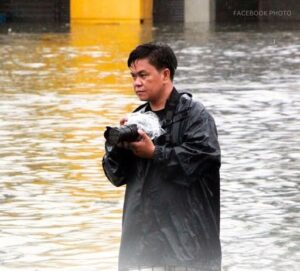
Media organizations are urging a review of safety protocols for journalists following the death of photojournalist Armelito Son, who collapsed while covering the Feast of the Black Nazarene procession in Manila on January 9.
The Movement for Media Safety Philippines (MMSP) said the incident highlights the risks faced by reporters and photographers in high-pressure assignments. “Safety and security must be prioritized in coverage planning, including knowing when to withdraw from dangerous or exhausting situations,” the coalition stated.
Son, a contributor to Saksi Ngayon, was found unconscious near Quirino Grandstand, the starting point of the annual Traslacion. He was rushed to Gat Andres Bonifacio Memorial Medical Center but was declared dead shortly after arrival.
According to MMSP, Son had been experiencing flu-like symptoms since late December. Saksi Ngayon confirmed he was coughing and had a cold during coverage. The Presidential Task Force on Media Security also noted these health concerns in its statement. The tabloid has pledged financial support to Son’s family.
MMSP pointed to existing guidelines such as the Philippine Journalists’ Safety Guide published by the National Union of Journalists of the Philippines (NUJP) in 2020, and recommendations from Reporters Without Borders (RSF) that journalists undergo medical check-ups before deployment.
The coalition acknowledged that implementing such measures remains difficult due to understaffed newsrooms and the precarious economic conditions of many journalists.
It noted that tabloid reporters and photojournalists are often paid per piece, sometimes as low as ₱50–₱100, forcing them to work despite illness or exhaustion. Some contributors, it added, face delayed or unpaid compensation.
MMSP called on media managers and owners to ensure the safety and well-being of their staff, stringers, and contributors. The coalition includes NUJP, the Philippine Press Institute, the Philippine Center for Investigative Journalism, the Center for Media Freedom and Responsibility, and the People’s Alternative Media Network. (ZIA LUNA)