by Diego Morra
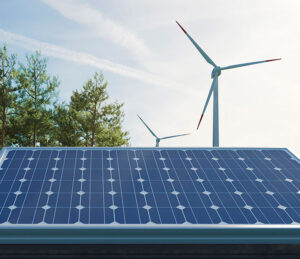
What’s the point of selling off the country’s land to generate 158 gigawatts (GW) of electricity from so-called “green” solar and wind power projects? This 158 GW output is actually 800% higher than the country’s entire peak demand in 3024, the Kilusang Magbubukid ng Pilipinas (KMP) found out. Parsing through the daily reports about the national energy supply and demand, it appears that the country has excess supply of electricity, with consumers naturally paying through the nose to guarantee profits for power generating plants, transmission systems and distributors.
On Dec. 9, KMP argued that the sudden aggressive push for renewable energy (RE) and “green” investments will trigger an unprecedented wave of land grabbing across the country, threatening farmers, indigenous peoples (IPs) and rural communities. This Marcos Jr. policy runs afoul of the very Comprehensive Agrarian Reform Program (CARP) that Malacanang vowed to complete before the President ends his constitutional term in 2028. Think of the disastrous handling of the huge Roxas property in Batangas to led to the squashing of Certificates of Land Ownership Awards (CLOAs) held by farmers and the grant of more than half of the CARP lands to the Roxases to be utilized for a solar project and eco-tourism ventures.
In Cavite, irrigated lands ended up as golf courses and residential subdivisions for the idle rich, irrigated farms in Iloilo were transformed into a Villar commercial center and the Department of Agrarian Reform (DAR), not content with these nefarious land conversions, is working with the Maharlika Investment Corp., which is supposed to be a sovereign wealth fund (SWF) to legitimize the planned agricultural estates for foreign capital, as well as farms to be converted into RE sites. Earlier, pieces of legislation were enacted to make it easier for CARP beneficiaries to sell or lease their land, unmindful of the bankrupt joint ventures of the Cojuangcos with farmers in Negros Occidental.
KMP bemoaned the fact that while the CARP fund for land acquisition and distribution (LAD) has been diminished, the Department of Energy (DOE) has also thrown a monkey wrench into LAD process enlarging the land requirements for RE projects. As of December 2024, the combined awarded solar and wind projects would require an estimated 3.113 million hectares of land—half of all agricultural land in the Philippines, and larger than the combined land area of Negros and Palawan. From where would DOE source these huge tracts of land? Certainly not in Benham Rise, now called Philippine Rise, or in Scarborough Shoal. Once implemented, these RE projects would hit existing farm holdings, ancestral domains, coastal commons, forests or fishing grounds. What DOE sells as “clean energy” leads to the dirty and largest wave of land dispossession to be suffered by the peasantry.
“Marcos is allowing massive land-grabs under the guise of clean power. The government is auctioning off millions of hectares to foreign firms and local cronies while peasants face eviction, militarization, and loss of livelihood,” KMU protested. For solar projects alone, KMU disclosed that 963,185 hectares will be needed. Wind projects will need more than 2 million hectares, mostly in forest lands, ancestral domains and coastal communities. DOE is targeting 50 GW in offshore wind power output by 2050 while the awarded solar and wind projects under the latest round of the Green Energy Auction Program (GEA-4) will surely mean producing more power than what the market could consume. This irrational obsession with non-viable RE projects point to yet another possible occasion for corruption. Malacanang’s protestations that RE projects are a boon wilt under the weight of harm that peasants, IP communities and the rural populations will suffer.
In the GEA-4 concluded last month, government awarded a total of 10,195.49 MW of RE capacity to 123 bidders. These projects span ground-mounted solar (4,179.09 MW), floating solar (2,284 MW), onshore wind (2,518.29 MW), integrated renewable-plus-storage systems (1,189.29 MW) and rooftop solar (24.82 MW). SMC Global Light and Power Corp. secured majority of the awards, cementing the role of Ramon Ang and his associates as a most-favored-plutocrat (MFP), never mind if it takes him an eternity to complete MRT-7 and his much-ballyhooed New Manila International Airport (NMIA) in Bulakan, Bulacan, his seabed quarrying project in Cavite, a reclamation project in Manila Bay and his other much-hyped projects. The awarded projects are scheduled for delivery between 2026 and 2029.
“How can a country with a chronic rice and agriculture crisis afford to give away millions of hectares of productive land to corporations in the name of ‘clean energy’?” KMU argued. Land-intensive solar farms, wind farms, floating photovoltaic (PV) systems, and proposed offshore wind and carbon-credit schemes threaten to concentrate control over land and resources, displace communities, and reinforce monopolies in energy generation and distribution, along with the security risks posed by the 40% Chinese ownership of the National Grid Corp. of the Philippines (NGCP.) Call it national greed corporation from hereon, despite protestations by NGCP that its share of revenue from electric bills is very low but astoundingly huge when multiplied by the number of households served.
KMP warns that this “green energy boom” is precisely the kind of “false climate solution” that peasant and fisherfolk communities are warning about. “Behind every targeted megawatt and the green rhetoric lies a frantic scramble to convert vast tracts of land, coasts, forests, waterways, and agricultural lands into energy estates.” In the light of this alarming reality, and the vain attempt by government’s troll army to transform each Filipino into a gobemouche who would believe everything that Malacanang says about “green energy,” KMP called on Congress to immediately discuss House Resolutions 539 and 540 filed by Gabriela Women’s Party Rep Sarah Elago and Makabayan representatives. They seek a thorough investigation in aid of legislation into large-scale RE projects that will foster massive land grabbing and displacement of farmers, aside from collecting higher power tariffs.