
📷Kasama ng Kalikasan | Facebook
The Sangguniang Panlalawigan (SP) of Palawan has followed the lead of Marinduque, Capiz and Oriental Mindoro in protecting the environment by imposing a 50-year ban on mining operations through an ordinance approved on Mar. 7, 2025. Various organizations led by the Environmental Legal Assistance Center (Elac), Save Palawan Movement and One Palawan pushed for a ban while churches backed the move, along with indigenous groups pushed out of their ancestral domains by mining firms.
Danilo Ramos, national chairperson of the Kilusang Magbubukid ng Pilipinas (KMP) and a Makabayan senatorial candidate, immediately hailed the passage of the ordinance, saying “It is a resounding win for farmers, fisherfolk, indigenous communities, and environmental advocates who have long fought against the relentless plunder of Palawan’s natural and mineral resources. Known as the country’s last ecological frontier, Palawan is home to unparalleled biodiversity and rich natural ecosystems that sustain thousands of jobs. The ban shields more than 200,000 hectares from new mining applications.
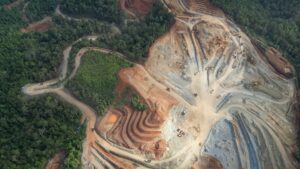
“For decades, mining operations in Palawan have left a trail of environmental devastation—deforestation, soil erosion, water contamination, and worsening climate vulnerabilities. The recent massive flooding in Brooke’s Point, which displaced over 600 families, underscores the urgent need to halt destructive mining practices and operations. This is not just an environmental issue; it is a matter of justice for the people who bear the brunt of environmental plunder. “Ang pagmimina ay hindi kaunlaran kung ang kapalit nito ay pagkasira ng kalikasan at pagdurusa ng mamamayan,” Ramos argued. He also lashed out the Chamber of Mines of the Philippines for claiming the moratorium is a “myopic decision.” The Makabayan senatorial candidate added that the people in Yulo King Ranch in Busduanga and Coron, along with the IP in Bugsuk island, continue to suffer as Marcos Sr.-era deals have denied them their right to land. In Bugsuk island, the Department of Agrarian Reform (DAR) restored the Cojuangco possession of arable land on the island, claiming that the island is not suitable for agriculture after centuries of cultivation.
Ramos explained that “what is truly shortsighted is prioritizing profit over people, prioritizing extraction over conservation, and allowing foreign and large-scale mining firms to exploit our mineral resources without accountability. The truth remains — the mining industry has never benefited the Filipino masses—it has only enriched a few at the cost of widespread poverty and displacement.” Philippine mining companies only ship out raw materials for processing in China, which curiously raised the myth that Palawan belongs to China through the work of the China riverine Muslim admiral and eunuch Zheng He, who never reached Palawan during the Ming Dynasty, prompting critics to denounce Beijing’s revanchism and insisting that Xi Jinping has gone “La Zheng.”
Elac executive director Grizelda Mayo-Anda was relieved after the ordinance was approved nearly a year after petitions and pastoral letters, as well as denunciations of the mining operations by KMP, Bayan Muna and the indigenous peoples of Palawan. “We are happy that the SP responded to the pastoral letter and the petitions from different sectors of Palawan’s society. With this ordinance, over 200,000 hectares that were under threat from new mining applications will now be protected for the next 50 years—or at least the next 25 years before any amendments could be made,” she said.
“I also call on the Marcos Jr. administration to fully respect the decision of the Palawan provincial government and the will of its people. National policies must not override local autonomy, especially when it comes to protecting our environment and communities. We have seen how the national government has disregarded similar mining bans in other provinces, like in South Cotabato and Tampakan. This must not happen in Palawan. Ang demokratikong kapasyahan ng mamamayan ang dapat manaig, hindi ang kagustuhan ng malalaking negosyo at mga kumpanya,” Ramos insisted.
Despite its many years of operations, the Chamber of Mines of the Philippines (COMP) has failed to develop mineral processing in the country, shipping out ores to China and other countries and buying expensive finished products from them in return. The late President Benigno “Noynoy” Aquino III tried to convince mining companies to process their ores locally to get better prices but his counsel wasn’t heeded at all. In 2012, he issued Executive Order No. 79, which imposed a moratorium on new mining permits or production-sharing agreements until a new revenue-sharing scheme was put in place. Aquino’s successor, Rodrigo Duterte, lifted the order in April 2021. In December 2021, the Department of Environment and Natural Resources (DENR) also lifted the 4-year-old ban on the open-pit method of mining, which was imposed by the late Environment Secretary Gina Lopez.
Before Palawan, several provinces also courageously imposed their mining bans. moratorium. Marinduque did it in 2005, imposing a 50-year ban. Capiz passed a mining moratorium in February 2002, reversing course in May 2016 because of the economic and social benefits the province would derive from mining activities, just in time to welcome Duterte. In June 2022, the provincial government of Oriental Mindoro issued an ordinance extending the local mining moratorium, which was passed in 2002 for another 25 years, starting in 2027. “Beyond Palawan, this victory must ignite a stronger push for a nationwide mining moratorium and the People’s Mining Bill passage. We need a mining policy that genuinely upholds national industrialization, ecological sustainability and rehabilitation, and social justice—one that ensures our mineral wealth is used for the benefit of all Filipinos, not for foreign investors and mining oligarchs,” Ramos concluded. (DIEGO MORRA)