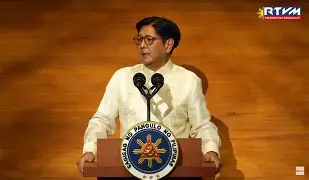

On every new State of the Nation Address, Filipinos listen with a mix of hope and suspicion. Hope, because leadership is supposed to deliver solutions; suspicion, because we have heard too many promises that sound good in the microphone but feel distant once the budget gets released and the implementing agencies get bogged down. The 2026 SONA of President Ferdinand “Bongbong” Marcos Jr. landed with the kind of political drama that catches headlines—most notably his striking statement going after his cousin, the former House Speaker, over allegations of massive corruption involving flood control. That move, on its surface, reads as a decisive break from the culture of impunity that has long corroded public service. But for Filipinos who are already tired of long delays and selective enforcement, this is not enough.
Yes, it is commendable that the President used the national stage to signal that corruption involving essential infrastructure—especially flood control—is not a “family issue” that can be covered up by political convenience. When a President publicly flags suspected wrongdoing, it can create pressure in institutions that otherwise move at a pace that seems calculated to exhaust citizens’ anger rather than address injustice. Still, what we must ask is a simple one: is this a real pursuit of justice, or merely a long overdue version of a promise last heard in the 2025 SONA?
A SONA is not a confession box. It is a blueprint. And when the President already sounded similar notes in the previous address, what the public expects now is not a repetition of intent, but measurable outcomes. A year should not pass by without the case moving with clarity—without verified documents, without timelines, without accountability that reaches beyond statements and into enforcement. Justice cannot be reduced to the filing of complaints as a symbolic gesture. The Filipino people do not just want ink on papers. We want results: faster investigations, stronger prosecutions, transparent tracking of cases, and penalties that deter future corruption. If the President truly intends to go after wrongdoing, then the same urgency must apply to the many other leaks in the system where public funds vanish into private pockets.
Take flood control itself. When typhoons intensify and communities flood with alarming regularity, the public cannot accept a narrative that treats disaster as “inevitable.” Flooding is not only weather; it is also planning, engineering, maintenance, procurement discipline, and honest execution of contracts. If corruption happened in flood control, then the cost is not abstract—it is paid in ruined homes, lost livelihoods, medical emergencies, and trauma. A country can endure natural hazards, but it cannot endure leaders who allow corruption to persist just long enough for the outrage to fade.
The President’s remarks about electricity costs also carry a familiar appeal: the intention to eradicate the system loss charge in electric bills. On its own, this sounds like a direct relief measure for households and small businesses that struggle under rising utilities. It is easy to see why such a proposal would earn public applause. But relief must not be confused with reform.
The system loss charge may indeed be a band-aid, but band-aids are not a cure. Citizens deserve to understand why that charge exists in the first place, who benefits from inefficiency, and how the government will reduce the root causes of system losses rather than simply remove a line item. Erasing a fee without strengthening the grid, improving transmission and distribution efficiency, curbing pilferage, and ensuring transparent performance targets can become a temporary cosmetic adjustment. The bill may look friendlier, but the underlying problems—losses that stem from outdated infrastructure, mismanagement, and lack of accountability—may continue to extract value from consumers in other forms.
What the government should prioritize, beyond removing a specific charge, is energy resilience through a renewed and accessible energy industry. Resilience means more than having energy; it means having reliable energy sources that reduce dependence on volatility and imported supply shocks. It also means building an ecosystem where generation, transmission, distribution, and regulation work together to lower costs and improve service, not merely shift burdens around.
That kind of energy future requires policy that is both ambitious and grounded in the realities of the Filipino worker and consumer. Citizens cannot carry the weight of “transition” on their backs while they are still struggling with everyday expenses. The only sustainable path to a better economy is one that is right-based—anchored on fair wages, stable employment, and reforms that uplift the purchasing power of ordinary families. If energy costs remain high, if inflation keeps eating salaries, then households will experience “progress” as another round of financial strain. The President’s government must, therefore, pursue accessible energy options coupled with broad economic policies, including legislating humanizing wage increases across the board. Higher wages do not only help workers; they stabilize demand and strengthen local purchasing power, which in turn supports businesses and encourages investment. This is how reform becomes real rather than rhetorical.
Similarly, transportation policy cannot be treated as an afterthought. The President’s plans sound promising when they point toward modernization and long-term national development. But as exciting as space development may sound—an area that can inspire technological advancement and national pride—the government must prioritize better and efficient public transportation before embarking into space. Filipinos do not need inspirational visions while they are stuck on roads that choke daily, while commuting is exhausting, unsafe, and time-consuming, and while families spend a disproportionate portion of their day navigating traffic instead of building their futures.
Public transportation is not merely a convenience; it is an economic lifeline. When transport systems work, workers arrive on time, costs decrease, and opportunity expands. When they fail, the entire economy pays a hidden tax—lost productivity, increased fuel expenditure, and a growing sense of helplessness. If the administration can marshal resources for high-profile long-term projects, it can and should allocate serious effort toward urban mobility and commuter welfare now. The country’s first priority should be ensuring that citizens can move efficiently across cities and provinces, especially those who rely on public transit because they cannot afford private vehicles.
On energy and economic stability, the President also seems keen to address the lessons of oil crises and the risks of dependency on imported fuel. That is an important stance. However, dependency on oil imports has always been one of the most stubborn vulnerabilities in Philippine economic policy. We have lived through price shocks before. We have watched global volatility translate into local hardship. And yet, in many instances, government solutions have been slow, inconsistent, or framed as crisis response rather than proactive resilience building.
The SONA must push beyond the language of endurance—important as it is—to concrete strategies that make the country energy resilient. That means diversifying energy sources with reliability and cost-effectiveness, strengthening domestic and regional supply partnerships that do not leave the country hostage to any single external actor, and building infrastructures that reduce exposure to global price spikes. Energy resilience also means strengthening grid reliability so that power availability is not compromised by disruptions or poor maintenance. It means improving regulation and ensuring that projects are implemented in a way that protects consumers rather than primarily rewarding contractors.
At the same time, the President’s strong stand promoting public values and sovereignty against Chinese incursions deserves recognition. Sovereignty is non-negotiable. The country must defend its territory and uphold its rights under international principles. Incursions are not just geopolitical events; they affect fisherfolk, coastal communities, and national dignity. When leadership communicates that the Philippines will not accept intrusion as routine, it matters. It reassures citizens that the government understands the seriousness of defending the country’s interests.
But sovereignty must also be matched with integrity at home. A government cannot demand respect abroad while allowing corruption within its own institutions to undermine the people’s faith in governance. The public is watching for consistency: strong posture on the international stage, firm accountability in domestic affairs. The SONA cannot be a patchwork of bold statements and vague commitments.
Where the 2026 SONA falls short is in the clarity and specificity of its vision for sectors that directly shape everyday life—education, labor, and lawmaking that will meaningfully improve the conditions of Filipinos within the remaining two years of the President’s term. Filipinos do not require grand speeches alone. They need a roadmap with priorities, metrics, and legislative direction that can be executed quickly enough to matter.
Education is one area where “promising” is not enough. The SONA should have laid out a sharper plan for improving educational outcomes, teacher support, curriculum relevance, and learning environments. It should have clarified how the government will address learning gaps, strengthen vocational and technical education, expand access to quality schooling, and ensure that education leads to real opportunities in the labor market. The country cannot afford to treat education reform as a recurring theme. The nation needs results that can be measured in literacy, competency, graduation rates, and employment readiness.
The labor sector also deserves more than reassurance. A strong labor strategy means protecting workers from unfair practices, strengthening enforcement against labor exploitation, and ensuring that job creation is paired with fair wages and safe working conditions. If the administration truly believes in humanizing wage increases, it should provide a more direct labor policy plan: what bills will be prioritized, what enforcement reforms will be implemented, and how the government will ensure that workers benefit from economic growth rather than being left to absorb volatility. Labor reform is not just about wages—it is about dignity, stability, and the right to work without fear.
Then there is the matter of laws—legislation as a tool for urgent improvement. The last two years of a presidential term must become a period of legislative urgency, not only executive announcements. The SONA could have been more explicit about which laws will be prioritized, how timelines will be coordinated with Congress, and what specific outcomes the administration expects from those measures. When the public hears about corruption actions, energy reforms, wage considerations, and sovereignty defenses, it naturally asks: what bills will move, what budgets will support these plans, and what will be delivered before the term ends?
Without clear direction, the SONA risks becoming a catalog of themes rather than a structured plan for transformation. The President’s supporters may interpret the lack of specificity as flexibility or political strategy. But citizens do not experience policy as “flexibility.” They experience it as unemployment or underemployment, as unaffordable electricity bills, as unsafe commutes, as inadequate public services, and as continued delays in justice. In the real world, flexibility is what allows problems to remain unsolved.
What is the central lesson of the 2026 SONA? It is that bold statements can start momentum, but momentum is not the same as progress. Filipinos can appreciate a President’s willingness to confront corruption allegations publicly. They can also appreciate proposals to improve electricity costs and strengthen national defense. Yet the country will judge the administration not by the intensity of its rhetoric, but by the effectiveness of its follow-through.
If the President wants to make history, he must turn overdue accountability into decisive action with transparent timelines. If he wants to reduce electricity burdens, he must replace band-aids with a resilient energy model that benefits the public and strengthens the economy. If he wants to modernize the nation, he must prioritize transportation solutions that directly improve daily life. If he wants energy resilience, he must address dependence not only in speech but in policy architecture and infrastructural strength. And if he wants to uplift Filipino lives, he must present a clearer, more actionable vision for education, labor, and lawmaking—especially with the remaining years.
The Filipino people deserve justice that is swift and verifiable, not justice delayed and hope rehearsed. They deserve reforms that reduce suffering, not merely proposals that sound comforting. And they deserve a government that treats every national promise—whether about corruption, electricity, jobs, transport, education, or sovereignty—not as a slogan, but as a commitment with deadlines.
The 2026 SONA had moments of strength. Now the administration must prove that strength converts into outcomes. In a democracy, the public’s patience is not infinite. It is measured not in how loudly leaders speak, but in how faithfully they deliver.#