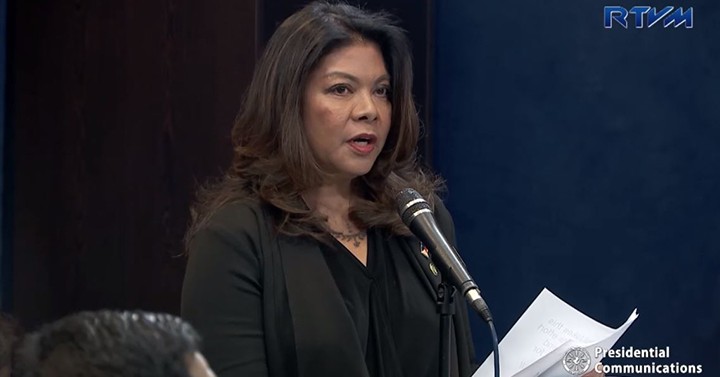

Former Bayan Muna Representative Carlos Isagani Zarate hailed the Supreme Court’s order returning ₱60 billion in PhilHealth funds to the national treasury as a “partial victory for fiscal accountability,” but warned that the Court’s silence on the ₱107 billion transfer from the Philippine Deposit Insurance Corporation (PDIC) leaves a “dangerous legal loophole” that could embolden Congress and the executive to raid government-owned corporations for unprogrammed appropriations.
Zarate, one of the principal petitioners in the case, hailed the ruling as a “partial victory for fiscal accountability” but warned that the Court’s omission leaves the door open for future raids on government-owned corporations (GOCCs).
“The Supreme Court’s decision on the PhilHealth funds is a welcome, though partial, affirmation that public funds must not be used at the mere whim of the executive branch,” Zarate said. “However, the absence of a similar pronouncement regarding the ₱107 billion PDIC fund transfer is concerning.”
The PDIC funds, Zarate stressed, were meant to serve as a safety net for bank depositors, not as a piggy bank for the Marcos Jr. administration’s unprogrammed appropriations.
Zarate accused both the executive and Congress of exploiting budget provisions that allow them to designate GOCC funds as “excess” and reallocate them without proper scrutiny.
He warned that the silence of the Court on the PDIC case “effectively leaves a dangerous legal loophole open.”
This loophole, he said, could embolden lawmakers to insert special provisions in the General Appropriations Act (GAA), enabling further transfers from GOCCs to fund projects outside the rigor of legislative debate.
Zarate did not mince words, calling the practice a direct threat to fiscal transparency:
“This is not a theoretical threat; it’s a clear and present danger to our public coffers. The use of these ‘unprogrammed’ funds often lacks transparency and allows the government to spend money on items not subjected to rigorous legislative debate, leading to potential misuse or questionable projects, as it is happening now.”
The former lawmaker urged the Supreme Court to issue a categorical ruling that bars the diversion of GOCC funds intended for specific public purposes, such as health insurance or deposit protection, into the national budget or pork barrel allocations.
“Until that legal loophole is closed, the people’s money will always be at risk of being diverted through questionable special provisions in the budget,” Zarate warned. (ZIA LUNA)